Ukraine's revised NECP puts the energy savings target under the spotlight
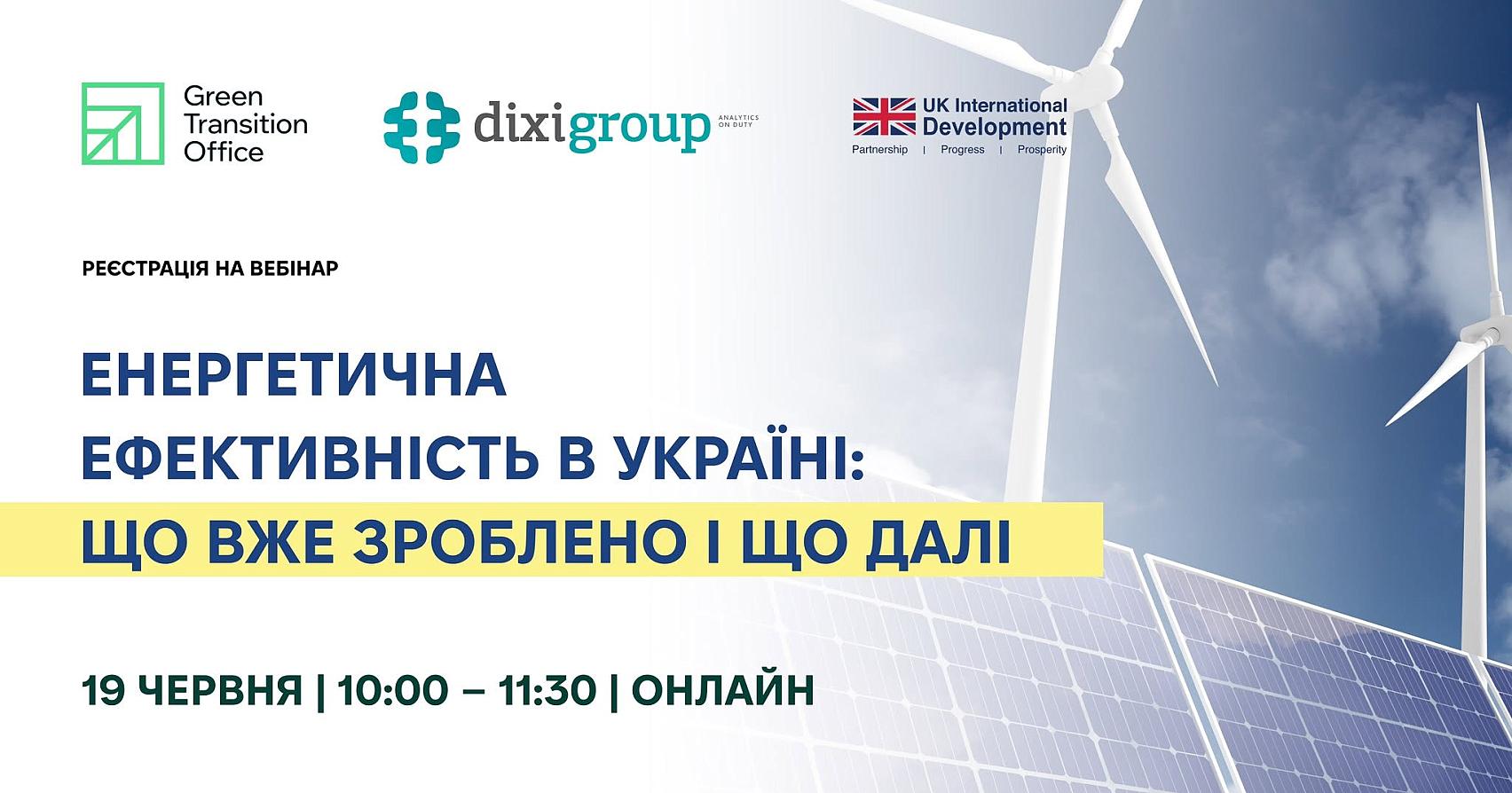
On June 10, the government approved a revised version of the National Energy and Climate Plan through 2030. The document has been published on the website of the Ministry of Economy, Environment and Agriculture of Ukraine. The update featured as one of the key topics at the webinar "Energy Efficiency in Ukraine: What Has Been Done and What Comes Next," held on June 19 by the Green Transition Office and moderated by independent energy policy expert Olena Baida.
The energy efficiency dimension of the revised plan covers 32 policies and measures, one more than in the previous version. Two targets stand out: energy savings in public authority buildings by 2030, and cumulative energy savings exceeding 16 million tonnes of oil equivalent over 2021–2030. At present, less than one percent of that cumulative target has been met.
Andriy Frolov, Head of the NECP Implementation Coordination Sector at the Ministry of Economy, Environment and Agriculture of Ukraine, urged against treating the document as a bureaucratic formality.
"The National Energy and Climate Plan is not a static document. It is a living mechanism, one that already allows us to track progress and respond to challenges on Ukraine's path to European integration," he said.
Frolov added that the Ministry and the Green Transition Office are jointly developing a monitoring platform for the plan. It will be publicly available soon, with results reviewed quarterly at the interministerial working group level.
Liubava Radiichuk, Director of the Recovery and Reform Support Team at the Ministry of Community Development and Territories of Ukraine, highlighted the difficulty of keeping long-term goals in view while managing the immediate pressures of war. Her team draws on the European Commission's annual enlargement report and Ukraine's National Programme for the Adoption of EU Legislation, which sets a December 2027 deadline for the energy efficiency sector.
The Ministry is currently working on energy efficiency requirements for publicly procured goods, while legislation on building energy performance is being updated in parallel.
"We are balancing the need to get through the heating season in the near term against the longer-term goal of decarbonising heat supply. But the direction of policy is clear: energy efficiency and renewables, because without them we simply will not meet our EU accession commitments," said Liubava Radiichuk.
Financing came up as a recurring theme across every area of energy efficiency policy discussed at the webinar. Andriy Kitura, Head of the Green Transition Office at the Ministry of Economy, Environment and Agriculture of Ukraine and Director of Development at NGO DiXi Group, took up the question of where to find resources for concrete measures.
The Office does not provide direct funding. It has instead launched and maintains the Green Platform on the "Made in Ukraine" portal, a catalogue of more than 120 financing programmes from Ukrainian and international banks and partner organisations.
Beyond existing programmes, the Green Transition Office is developing additional tools to encourage energy efficiency measures. One is an energy efficiency obligation scheme, a market mechanism under which energy companies help their customers reduce consumption.
The Office has published a new study on this instrument, presented at the webinar by Valentyna Huch, Energy and Climate Expert at the Green Transition Office. Ukraine's Law on Energy Efficiency already provides a legal basis for introducing such a scheme to accelerate progress toward the national energy savings target.
"For the scheme to work, you need political will and market-based energy prices. The list of obligated parties also has to be set out in law," said Valentyna Huch.
Olena Baida noted that the public NECP monitoring platform will go live shortly, allowing anyone to track implementation of specific policies and measures.
The Green Transition Office is an independent advisory body under the Ministry of Economy, Environment and Agriculture of Ukraine that helps to implement reforms in the field of green transition, energy and climate policy of Ukraine. The Green Transition Office operates with the financial support of the UK Agency for International Development and is implemented by DiXi Group.
Published on