ESG Regulation After Omnibus I: What Has Changed and What It Means for Ukraine
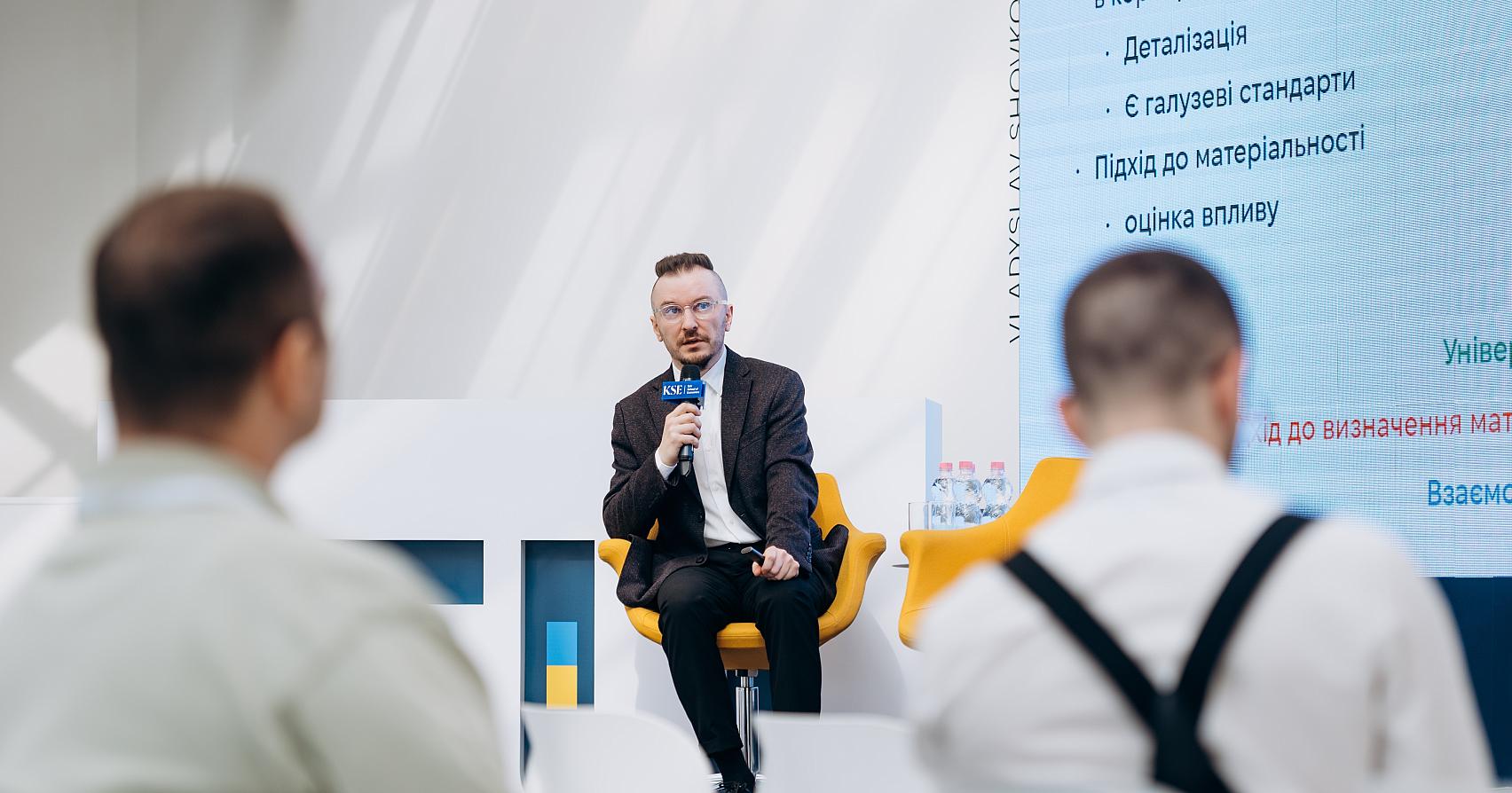
The European Union has adopted the Omnibus I package and significantly revised its corporate sustainability reporting requirements. For Ukrainian businesses oriented toward European markets, this is no abstract regulatory shift: the new rules are already shaping the expectations of banks, investors, and major partners. On 30 March 2026, the Green Transition Office, together with KSE Graduate Business School, examined precisely what has changed, which companies fall under the new requirements, and what firms should be doing right now.
What Omnibus I Changed — and What It Did Not
When the EU Council adopted the Omnibus I package, it fundamentally reworked the CSRD directive's core parameters. The most consequential shift raises the threshold for mandatory reporting: the directive now applies to companies with more than 1,000 employees and a turnover exceeding €450 million. This is estimated to reduce the number of companies obliged to report in the EU by approximately 80%. Yet even the reduced pool still comprises thousands of companies, including those operating in Ukraine or maintaining subsidiaries here. The package also legally codified protections for small and medium-sized enterprises within supply chains: large companies may no longer request more information from SMEs than what the VSME standard stipulates. In practice, such requests are already arriving regardless of whether a company falls under mandatory requirements.
As Oleksiy Yatsiuk, expert at the Green Transition Office, put it: "By adopting this package, they have finally enshrined all these rules in the European Union and provided clear guidance on what they will look like, which companies must report, and when."
The next step is to finalise the simplified reporting standards (ESRS), expected in the second or third quarter of 2026. The main wave of reporting in the EU is expected from 2028.
How Many Ukrainian Companies Fall Under the New Requirements
According to estimates by the Green Transition Office, more than 330 Ukrainian companies will fall under the CSRD criteria. In practice, the figure may be higher: a portion of large enterprises did not submit statistical reports during the war and were therefore not captured in the count. Fewer than 10% of Ukrainian businesses overall are currently prepared for full compliance — meaning the vast majority will encounter these requirements without any prior preparation. To assist companies in assessing their position, the Green Transition Office has published a basic self-assessment questionnaire on its website, allowing companies to answer a few questions and determine whether they fall within the scope of the directive.
The Ministry of Finance's Position: Progress Made and the Road Ahead
Liudmyla Haponenko, Director of the Department of Accounting Methodology and Regulatory Framework for Audit Activities at the Ministry of Finance, walked through what her ministry has done so far. An inter-agency working group has completed the translation of the ESRS glossary of terms, prepared a draft Cabinet of Ministers resolution on reporting in XBRL format, and developed amendments to legislation on accounting and auditing. Both draft laws are currently before the Verkhovna Rada. "The first year of reporting will not involve strict sanctions. But companies that fail to submit will suffer economically — through restricted access to listings, green finance, and international markets," she noted. The question of the reporting start date for Ukrainian companies is to be deliberated in the Verkhovna Rada in light of the ongoing state of war.
"Throughout the war, we have been so focused on living, surviving, moving forward. We deserve to live no worse than countries untouched by war. So I believe this will not pose too great a challenge for us, given that we are already preparing," the official said.
VSME: Where Small and Medium-Sized Businesses Should Begin
The VSME standard is a voluntary EU framework for companies not subject to mandatory CSRD requirements. It provides two levels of disclosure — basic and extended — with concrete guidance on which data to collect and how to present it. On 30 March, the Green Transition Office published an analytical document on SME reporting: an overview of the VSME standard and an analysis of examples from EU companies of varying sizes that are already applying it in practice, including an examination of the strengths and weaknesses found in real-world reports.
In Yatsiuk's words: "If you are able to report under VSME, you will satisfy 95–99% of the requirements of Ukrainian and international banks providing targeted financing."
The Talent Gap: The Core Challenge Facing Ukrainian Business on ESG
A survey of 500 senior executives at Ukrainian companies, conducted by the Green Transition Office, found that a shortage of ESG specialists was identified as the primary obstacle — ranking above incomplete legislation and the absence of data collection systems. An analysis of current job vacancies confirms that the skills businesses are seeking are not yet reflected in any existing master's programme in Ukraine. The gap is visible enough that foreign specialists are now coming to Ukraine to fill it.
Yatsiuk was candid about how the results defied expectations: "Our hypothesis was that this would rank in the top three or five challenges for businesses. But executives placed the shortage of specialists in first position."
The Green Transition Office, together with KSE Graduate Business School, is launching the certification programme "ESG Leadership and Sustainable Impact: Strategy, Governance, Transformation," starting on 15 April and designed for executives, functional managers, and consultants implementing ESG approaches within their organisations.
Conclusion
For Ukraine, Omnibus I is less about regulatory compliance than about economic positioning. Companies that move early gain access to green finance, build credibility with international partners, and secure a foothold in European markets before the rules become unavoidable. Those that wait are not simply behind — they are making a strategic choice whose costs will become visible only when it is too late to reverse them.
https://gto.dixigroup.org/assets/images/news/standarty-zvitnosti-zi-staloho-rozvytku-dlia-msb.pdf
Published on