From search to application: how Ukrainian municipalities find financing for green projects
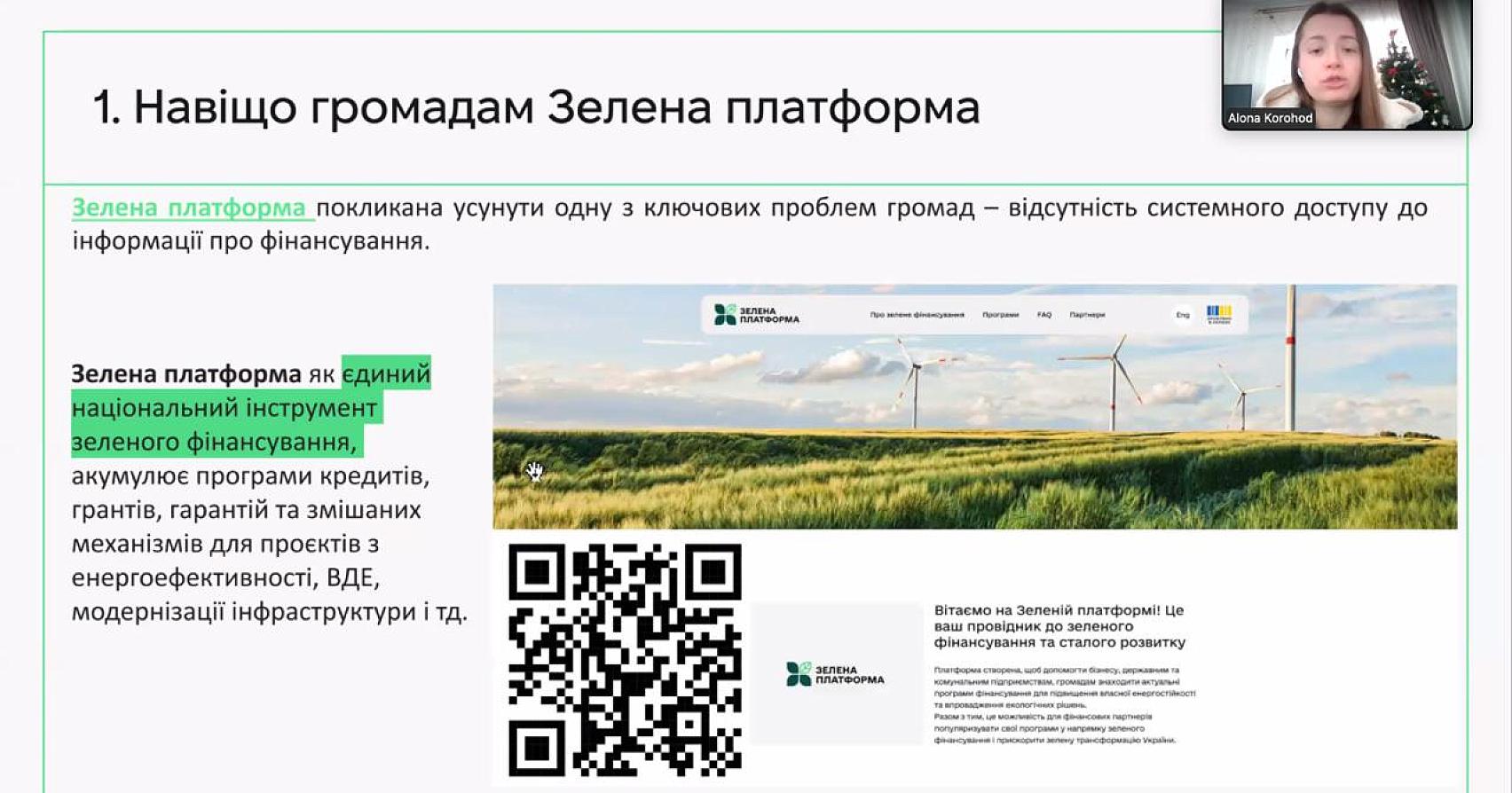
Alona Korohod, Green Policy Expert at Ukraine's Green Transition Office, held an online session on the "Marketplace of Solutions for Communities" platform, walking municipalities through the Green Platform – from identifying needs to submitting competitive applications. She broke down common mistakes that cost local governments funding opportunities.
The first problem: reactive instead of strategic planning. Municipalities see a new grant and rush to build a project around it. That's inefficient. Better approach: develop a portfolio of 3-5 project ideas aligned with long-term needs – building energy efficiency, grid modernization, transport upgrades. Then match optimal combinations of grants, loans, and co-financing to each project.
Second mistake: outdated documentation. Many programs require current energy audits, feasibility studies, and cost estimates reflecting real prices and infrastructure conditions. Year-old documents? Donors reject them. Documentation needs regular updates, not last-minute preparation.
Third barrier: no donor engagement. IFIs and funds often offer preliminary consultations – they'll validate project relevance, advise on budget structure. But municipalities rarely reach out early, losing the chance to refine proposals before submission.
The core problem the Green Platform solves: scattered information. IFI programs, donor opportunities, EU fund calls live on different websites, often in English, with shifting deadlines. Municipalities spend weeks searching. The Platform consolidates everything: as of early 2026, over 20 grant programs, around 20 credit lines, plus specialized financing mechanisms – all searchable in one place.
Filter system works across multiple parameters simultaneously: economic sector, financing type, target audience, amount, region. Example: a municipality searching for boiler modernization grants with a budget up to 5 million hryvnia gets a list of relevant programs with detailed requirements, deadlines, and contacts within minutes.
Each program card shows not just general description but concrete requirements: who can apply, what documents are needed, co-financing share, eligible expense categories. This lets municipalities immediately assess capacity: Can we cover the match? Is there enough preparation time? Does our project meet technical parameters?
The session highlighted how to combine financing sources. Part of costs covered by grants, part through concessional loans from EBRD or EIB via Ukrainian banks, part through energy service contracts. This model reduces pressure on local budgets and enables larger-scale projects aligned with strategic energy efficiency goals.
The expert also emphasized avoiding last-day submissions. Technical failures, rushed reviews, incomplete documentation – these are the most common rejection causes. Her advice: implement internal checklists and double-verification systems. This minimizes formal errors.
"The Green Platform helps municipalities shift from ad-hoc decisions to systematic investment portfolio management. This is critical for sustainable recovery: decisions made now will determine communities' development trajectory for decades," Alona Korohod concluded.
Detailed guide "How municipalities can use the Green Platform to find financing" available at:
Published on