EU Taxonomy for Ukraine: why we need it more than they do
Ukraine needs reconstruction funding three times the size of its GDP. That money does not exist on the domestic market. It will have to come from abroad, and every foreign investor already attaches conditions tied to sustainable development, including compliance with the EU Taxonomy.
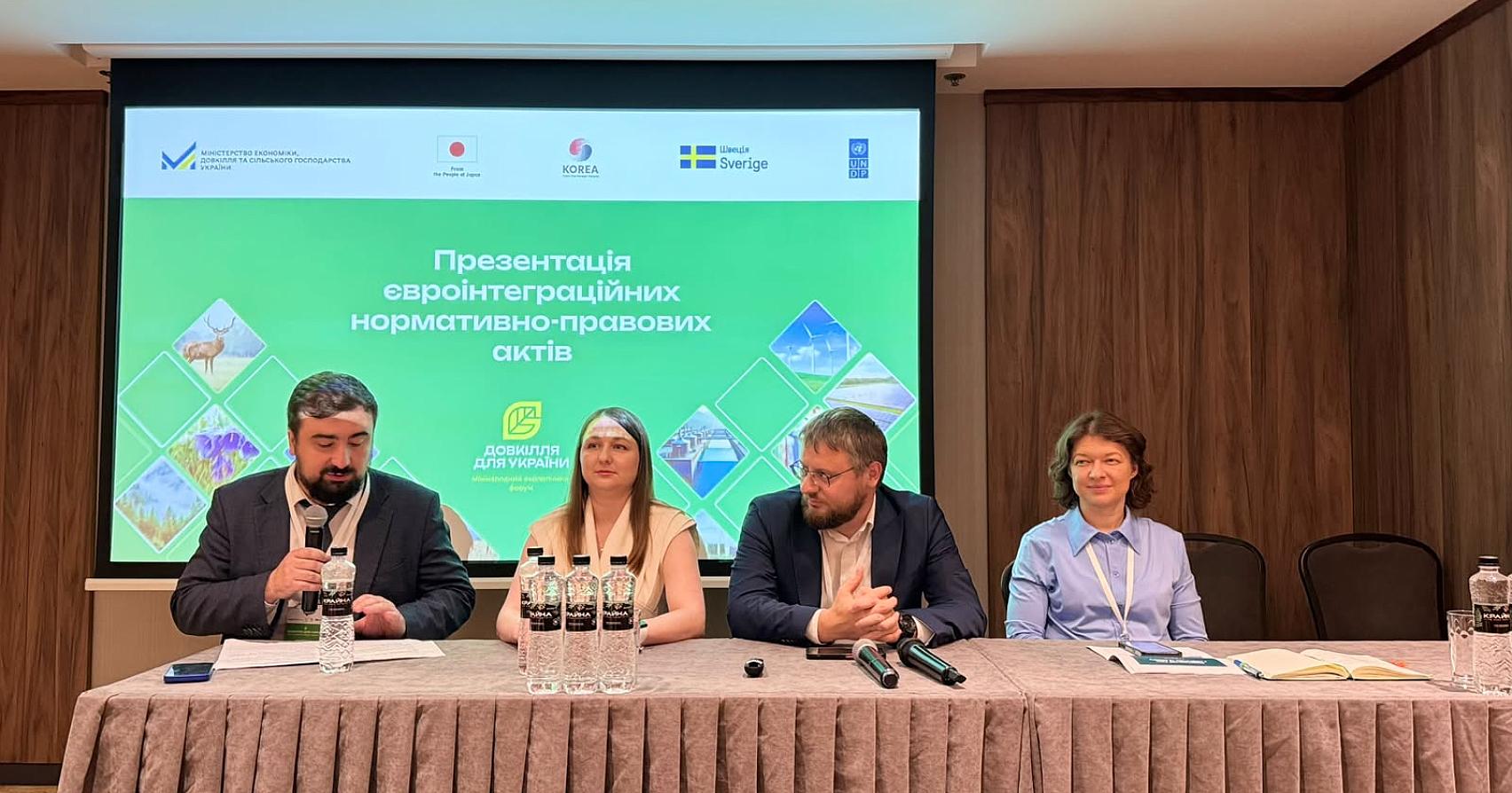
This was the message from Andrii Kitura, Head of the Green Transition Office, at the International Environmental Forum "Environment for Ukraine", organised by the Ministry of Economy, Environment and Agriculture of Ukraine.
The EU Taxonomy is a unified standard defining which economic activities qualify as sustainable. Introduced in 2021 through a regulation and several delegated acts, it sets technical criteria for more than 100 types of economic activity and reporting requirements covering financial institutions. For Ukraine, it is a directly applicable act and one of the obligations on the path to EU membership that cuts across several negotiating chapters at once.
"If we want to join the EU, implementing the Taxonomy is mandatory. But we need this more than they do. Ukraine requires enormous funds for reconstruction, funds that do not exist on the domestic market. Estimates put the figure at three times our GDP. And if we manage to mobilise even part of that, the money will come from abroad. Every dollar, every euro that enters Ukraine will come with sustainable development requirements, and in all likelihood Taxonomy requirements. There is no other way to bring capital into Ukraine," said Andrii Kitura.
The forum also addressed a question circulating widely in professional circles: will the Taxonomy be scrapped as part of the Omnibus package, through which the EU is reviewing its regulatory framework with an eye to simplification? The framework itself remains unchanged. What has been revised are the descriptions and criteria for specific types of activity. One new activity has been added, four have been removed, and others have been amended to varying degrees.
Ukraine will need to implement an already updated version. The EU has published the changes and is now running a public consultation; they are expected to be finalised before the end of summer. Ukraine must develop its own legislation while simultaneously tracking what the EU is still revising.
The Green Transition Office, together with the Ministry of Economy, Environment and Agriculture, the Ministry of Finance, and the National Bank of Ukraine, has conducted extensive working-level consultations. A draft law is ready and is expected to be released for public consultation shortly.
Published on