ESG Requirements in the 5-7-9 Program: How Businesses Can Adapt to New Standards
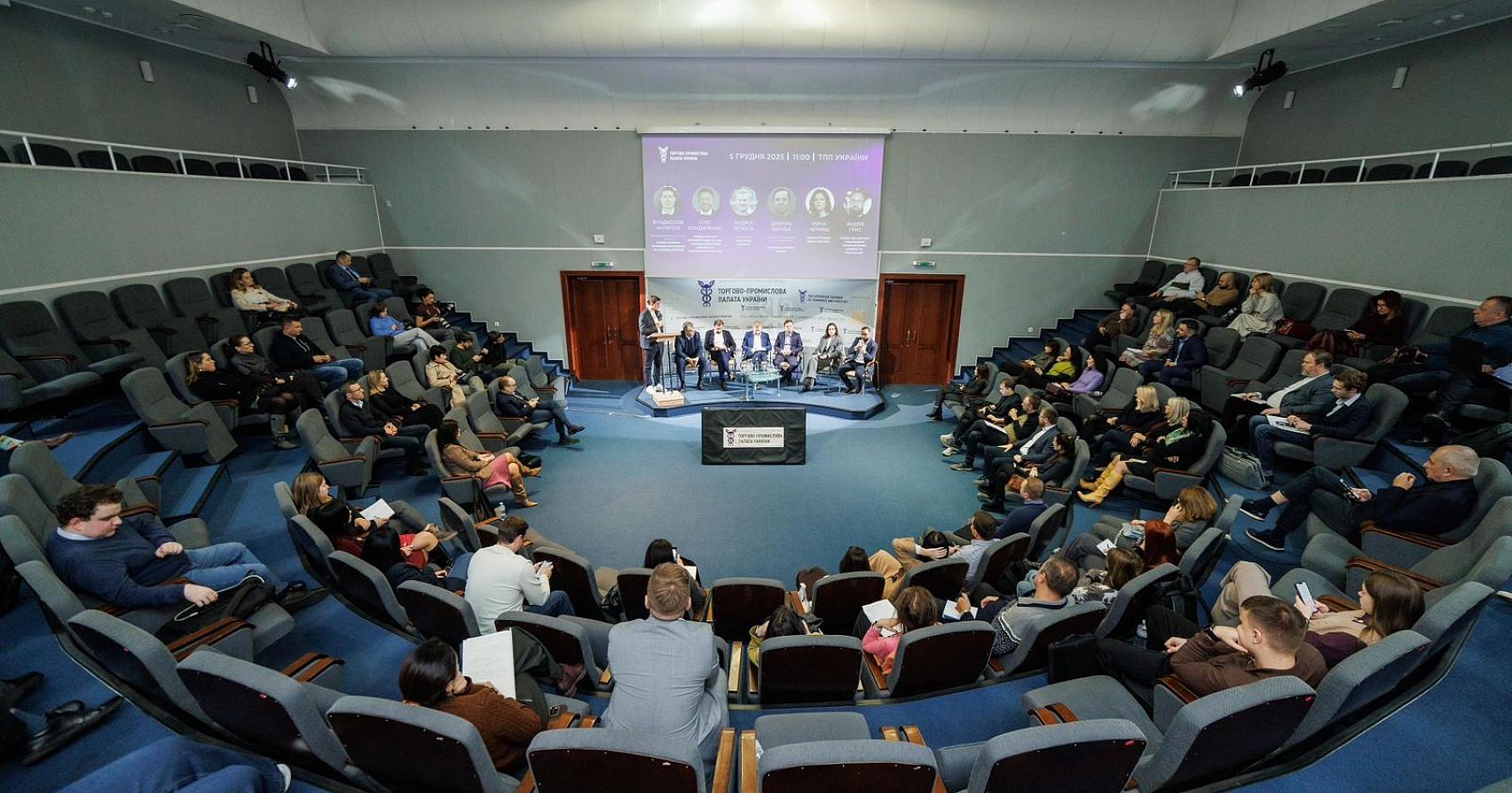
An expert discussion titled "5-7-9 Credit Program for SMEs: What You Need to Know About ESG Requirements" took place at the Ukrainian Chamber of Commerce and Industry, organized by the Green Transition Office, the Ukrainian Chamber of Commerce and Industry, and the National Bank Association of Ukraine. The event brought together government representatives, banking sector officials, international partners, and the business community to discuss the new realities of financing for small and medium-sized enterprises.
Starting December 2025, all projects financed under the "Affordable Loans 5-7-9%" program, which is part of the "Made in Ukraine" producers' development policy, will be required to undergo environmental and social assessment according to World Bank standards. For many businesses, this means new approaches to project preparation, documentation, and interaction with banks.
The central question of the discussion was how to balance international financing standards with the actual capacities of businesses during wartime. Deputy Minister of Economy, Environment and Agriculture of Ukraine Andrii Teliupa explained the nature of the new requirements:
"Financing for international partner support programs almost always includes requirements to consider ESG principles. The 5-7-9 Program is supported by the World Bank, and therefore the requirements for program recipients incorporate provisions that align with the World Bank Group's policies. On the other hand, we are very well aware of the real capacity of small and medium-sized businesses to implement ESG principles and reporting, especially during wartime. That's why we are systematically working with our international partners, including the World Bank, to achieve reasonable simplification or postponement of ESG requirements, at least during active military operations."

According to the Deputy Minister, a draft amendment to the Procedure for Providing State Financial Support to Business Entities is currently being developed, which includes certain deferrals for critical economic sectors, particularly energy, as well as enterprises operating in high military risk zones. The deferrals are planned to remain in effect during martial law and for 180 days following its termination.
At the same time, Ukraine must meet future EU requirements in the context of European integration. Specifically, the country is obligated to implement one of the EU's key ESG directives – the CSRD. According to calculations by the Green Transition Office, approximately 3,000 enterprises in Ukraine fall under the current CSRD criteria, while under the updated Omnibus criteria from the European Commission, this number is reduced to just over 330 enterprises.
A systematic approach to implementing ESG standards requires coordinated efforts across various state institutions. Andrii Kitura, Head of the Green Transition Office, presented a roadmap that unites the work of government, parliament, and international partners:
"We are working to coordinate the efforts of government, parliament, and international partners for the effective implementation of ESG requirements in Ukraine. This is not just a formality – it is a response to specific recommendations from the European Commission in the 2025 EU Enlargement Report."

The roadmap encompasses the implementation of the EU Taxonomy, sustainability reporting standards, ESG risk management in the financial sector, and the creation of sustainable financing mechanisms.
However, even the best strategies only work when the financial sector is ready to implement them in practice. Andrii Grys, Head of the ESG Committee of the National Bank Association of Ukraine and Head of the Environmental and Social Risk Department at JSC Bank "Ukrgasbank," shared the banking sector's experience working with the new requirements:
"As of today, most banks actively participating in the '5-7-9' program have already received the relevant confirmations from the Entrepreneurship Development Fund. This means that formally, the sector is generally ready to work with the new requirements. Environmental and social assessment of activities or projects is not a barrier invented by banks or international organizations to complicate access to financing. In reality, it is an opportunity. An opportunity to identify risks that previously remained 'in the shadows,' an opportunity to green your operations, make them safer for employees, communities, and the environment, and therefore more attractive to investors."
Every bank that wants to work with World Bank funds under the 5-7-9 program must implement an Environmental and Social Management System (ESMS) in accordance with the requirements of the international financial institution. The expert emphasized banks' readiness to support clients in this transition: "Bank managers are always ready to advise on exactly what needs to be done to obtain a positive assessment, which documents to collect, which minimum legislative requirements must be met, and which simple steps will help meet World Bank standards."

Research shows that Ukrainian businesses are ready to move toward ESG transformation. According to data from the Green Transition Office, 87% of entrepreneurs support the idea of implementing ESG principles. At the same time, 77% strongly need support on the path to implementation – explanations, instructions, examples, and training. Within the ESG Committee of the National Bank Association of Ukraine, specialists are working to standardize approaches to environmental and social assessment across different banks, preparing methodological guidelines, and sharing best practices.
The panel discussion demonstrated that implementing ESG requirements in the 5-7-9 program is not only a challenge but also an opportunity for Ukrainian businesses to modernize, enhance their competitiveness, and gain access to international capital.
Published on